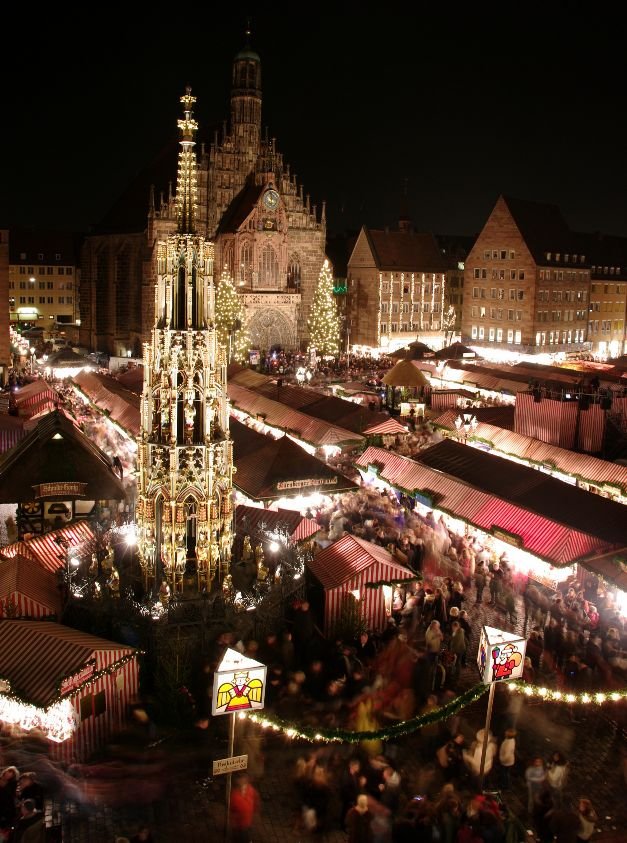
Tuesday evening, one laptop, three Christmas markets
It was raining in Manchester last Tuesday — the sideways kind — and I decided, over a cup of tea, that this December I am finally doing the Christmas market trip properly. Vienna, Nuremberg, maybe Munich. Three cities, four days, Glühwein budget pre-approved by my own conscience.
Instead of the usual forty open tabs, I gave the whole planning job to AI: one evening, three chatbots, strict rules. Plan my itinerary, estimate my costs, draft my packing list, and flag anything a first-timer wouldn’t know. Then I checked every fact against official sources, because — spoiler — the AI got something important wrong, and it’s the same thing it always gets wrong.
Here’s the diary of that evening, including the prompts that worked, the one that embarrassed me, and what I’d do differently.
7:10 PM — The master prompt that set everything up
I started with ChatGPT (GPT-4-class model, October 2026) and wrote one long briefing prompt rather than twenty small ones. The key was constraints: dates, budget, cities, travel style, and what I explicitly did NOT want.
“I’m planning a 4-day Christmas market trip, December 10–13, 2026. Flying from Manchester. I want to visit Vienna and Nuremberg, possibly Munich if it fits. Budget: £900 total excluding flights. I travel by train between cities, I don’t drive. I want market opening hours, one must-see non-market sight per city, and a realistic daily food budget. Do NOT suggest driving itineraries. Ask me nothing — make reasonable assumptions and state them.”
The “ask me nothing” line matters. Without it, the chatbot interrogates you for ten minutes about hotel star ratings. With it, you get a plan you can react to, which is faster.
The output was genuinely good: a day-by-day split (2 days Vienna, 1.5 Nuremberg, half-day travel buffers), train times that looked plausible, and a food budget of €35–50 a day that matched what my friend paid in Vienna last year. I cross-checked the train times on the ÖBB and Deutsche Bahn sites — the 8:24 Vienna–Nuremberg connection it suggested actually exists. Points for that.
7:40 PM — Where it went wrong: the market dates
Then I asked for the exact opening dates of the Christkindlesmarkt in Nuremberg and the Rathausplatz market in Vienna. ChatGPT confidently gave me dates — and they were last year’s dates. Nuremberg’s market opens November 27 in 2026, not the November 28 it stated; Vienna’s Rathausplatz dates were off by a day too.
This is the single most important lesson of this whole experiment, so let me say it plainly: AI chatbots are terrible at event dates. Always verify on the official market website. They predict plausible-sounding dates from training data instead of checking. It took me ninety seconds on christkindlesmarkt.de to get the real ones. Do the glamorous part with AI; do the dates yourself.
When I called it out, the chatbot corrected itself instantly and without shame. Classic.
8:05 PM — Claude planned the money
I switched to Claude for the budget spreadsheet, because in my experience it’s the most careful of the three with numbers. Prompt:
“Build me a day-by-day budget table for this trip: 2 nights Vienna, 1 night Nuremberg, mid-range hotels, trains between cities, £900 total cap excluding flights. Show each cost line, mark which are estimates vs fixed prices, and tell me where I’m most likely to overspend.”
The table came back clean: hotels €110–140/night in December (accurate for mid-range in both cities — I spot-checked three hotels on Booking.com and landed within €10), trains ~€60–90 total with Sparschiene fares, and a brutally honest “most likely to overspend” section. It flagged Glühwein at €4–6 a mug plus the €3–5 Pfand deposit you get back — a detail that proves the model has actually read German market guides rather than inventing prices. Total: €830. Under budget, with a €70 buffer for “one more Bratwurst than planned,” which is the correct unit of measurement.
One caveat: it quoted hotel prices as if December 2026 rates were already fixed. They’re estimates — hotels release December pricing in waves. Treat every AI price as a weather forecast, not a contract.
8:35 PM — Gemini handled the map logic
Here’s a trick most people miss: paste your draft itinerary into Gemini and ask it to find the geographic stupidity. My prompt: “Here’s my plan [pasted]. Point out any backtracking, over-ambitious days, or markets that are closed on the days I visit. Be blunt.”
It caught something real: my original plan had me crossing Nuremberg twice to reach two markets I could have visited in one walk. It reordered the afternoon and saved me an estimated 90 minutes of December cold. It also flagged that one smaller Vienna market I picked is closed on Mondays — my arrival day. That single catch justified the whole evening.
My stance after three evenings of this: Gemini is the best second opinion, Claude is the best accountant, and ChatGPT is the best first draft. Use them as a team, not a single oracle.
9:10 PM — The packing list and the first-timer tips
For the packing list I used a different technique — I asked for the list with reasons: “Packing list for 4 days of outdoor Christmas markets in December, each item with one line on WHY.” The whys surfaced things I’d have forgotten: hand warmers (markets are standing-around events, your hands freeze holding a mug), a small backpack (market purchases accumulate), and cash in small euro notes (some smaller stalls in Nuremberg still don’t take cards — this is Germany, after all).
Then the first-timer tips, and here’s where AI genuinely surprised me. It told me about the Pfand system — you pay a deposit on your Glühwein mug (€3–5), return the mug, get the deposit back. Or keep the mug as a souvenir, which is what everyone does with the Nuremberg one because each year’s design is different. It told me Vienna’s markets get unbearably crowded after 6 PM on weekends and to go at 3 PM instead. It told me to learn exactly three German words: Glühwein, danke, and Pfand zurück, bitte. All verified, all useful, none of it in the average travel blog’s top ten.
What I’d do differently next time
Two things. First, I would have started with the official market websites open in tabs next to the chatbot, not as an afterthought. The date error cost me nothing this time because I checked — but a lazier version of me books a hotel for the wrong weekend.
Second, I’d ask the AI to argue with itself: “Give me the plan, then give me three reasons this plan is bad.” The self-critique pass caught a boring rest-day I’d scheduled in Vienna that I replaced with the Belvedere Palace — a better use of a December afternoon than a nap.
Your turn: the 4-prompt starter kit
Steal these verbatim — they worked:
1. The briefing: “Plan a [X]-day Christmas market trip to [cities], [dates]. Budget [amount]. I travel by [train/car]. State your assumptions. Ask me nothing.”
2. The money: “Build a day-by-day budget table. Mark estimates vs fixed prices. Tell me where I’ll most likely overspend.”
3. The geography check: “Find backtracking, over-ambitious days, or closures in this plan. Be blunt.”
4. The self-critique: “Give me three reasons this plan is bad, then fix them.”
If you want the general method behind this, our step-by-step guide to planning a trip with ChatGPT covers the same approach for any destination.
One privacy note for the Europeans: you’re pasting travel dates and budgets into these tools. All three offer data-controls to stop your chats training their models — in ChatGPT it’s Settings → Data Controls → “Improve the model for everyone” off; Claude and Gemini have equivalents. Two minutes, worth doing before you paste anything personal. And if you’ll be working from cafés and hotel lobbies on the trip, read our guide to using AI tools safely on public Wi-Fi while travelling in Europe.
My four days are booked. Vienna, then Nuremberg, then home with a suitcase of mugs I definitely didn’t need. The AI did 80% of the work in two hours; the remaining 20% — the dates, the prices, the common ense — was mine. That’s the honest ratio, and it’s a good one.
3 thoughts on “How to Plan a European Christmas Market Trip with AI: Step-by-Step (2026)”