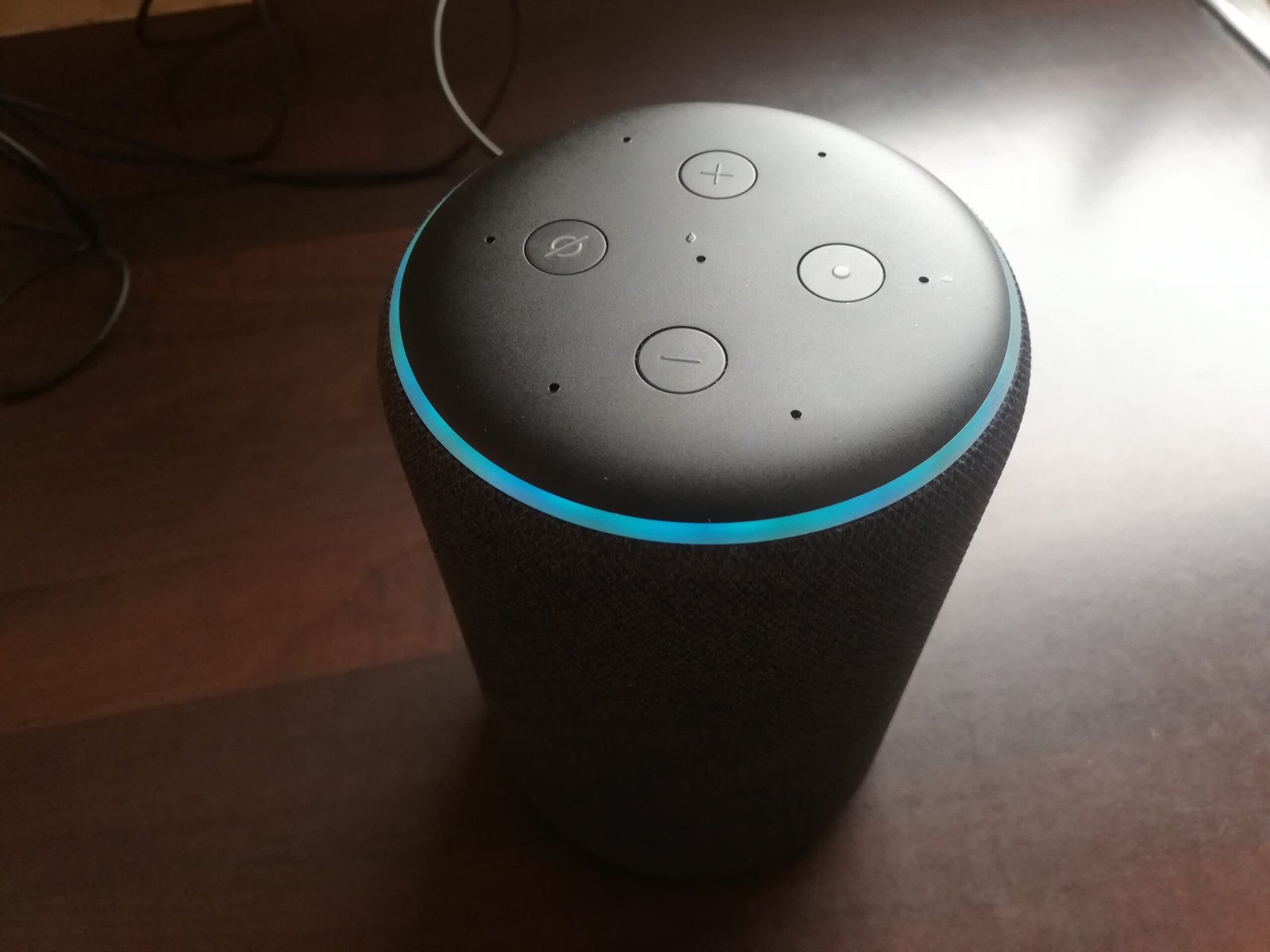
My hands were covered in bread dough when my phone rang — not a call, a timer I’d forgotten, then the oven’s own alarm on top of it. I couldn’t touch the screen. So I said, out loud, to the room: “Hey Google, how long should sourdough rest after shaping?” And the little circle on the Nest Hub answered: forty-five minutes to an hour, room temperature. My dough survived. That small moment is the whole reason I wrote this comparison.
Voice assistants grew up this year. The three big AI chatbots — Google’s Gemini, ChatGPT, and Claude — all gained genuinely conversational voice modes, and “which one should I talk to?” became a real question instead of a gadget curiosity. So I spent two weeks doing what I tell readers to do: I lived with all three, on my phone and on a speaker in the kitchen, and I tested them in the exact moments voice matters — when your hands are busy, when you’re driving, when it’s 2am and you’d rather talk than type.
Quick scope note before we start: I’m comparing the conversational voice modes (Gemini Live, ChatGPT’s voice mode, Claude’s voice conversations), not the old command-style assistants. Siri and Alexa as we knew them are a different species — these three hold actual conversations, interrupt, remember context, and reason out loud.
How I tested: five moments, not five questions
Benchmarks like “who answers trivia fastest” tell you nothing about voice. What matters is: can it handle me talking like a human, can it keep up when I change my mind mid-sentence, and does it understand what I mean when I say “the other one”? My five test scenarios:
- The kitchen test — hands covered in dough, asking for measurements, conversions, and step-by-step guidance I have to follow in real time.
- The motorway test — driving on the A3, asking for a nearby fuel stop with a working EV charger, then changing the request twice.
- The 2am test — half asleep, mumbling a question about a weird medical symptom, checking whether the assistant asks clarifying questions or just blurts an answer.
- The language test — switching between English and German mid-conversation, because half of Europe does this daily.
- The thinking test — asking something genuinely hard (a logic puzzle, a work dilemma) and listening to whether the voice actually reasons or just sounds confident.
Same scenarios, all three, on the same days. Here’s what happened.
Round 1: Gemini Live — the one that lives in your phone
Gemini Live is the voice mode most Europeans will meet first, because it’s already in their Android phone, on the power button’s long press. Google’s distribution advantage is so total it’s almost unfair: you don’t install anything, you don’t sign up anywhere new.
In the kitchen test, Gemini was excellent — the best of the three, honestly. I asked “convert 450 grams of flour to cups” and it said “about three and two-thirds cups” without missing a beat, then volunteered that spoon-and-level versus scoop-and-pack changes the answer. That extra detail is the difference between bread and a brick. When I said “wait, go back — what was the resting time again?”, it picked up the thread instantly. Context retention across a long, meandering cooking session was its standout trait.
The motorway test is where Gemini earns its keep. “Find a fuel stop with EV charging on my route” returned an actual charger 12 minutes ahead, on the A3 toward Cologne — with the charging network name (EnBW) and the number of free stalls. ChatGPT couldn’t touch this; it doesn’t have live location and map integration at this level. Google’s home-field advantage on maps and live search is a genuine, defensible moat in voice.
But the thinking test exposed the ceiling. I asked it to help me decide between two job offers, laying out salary, commute, and a vague sense of dread about one team. Gemini’s answer was competent and complete — and completely forgettable. It listed pros and cons like a spreadsheet. Useful? Yes. But it never asked the one question that mattered (“why do you think you feel dread about that team?”), which is the question a good human adviser asks first. (Comparing the three models in text mode too? Our ChatGPT vs Claude vs Gemini breakdown goes deeper on their thinking styles.)
Round 2: ChatGPT voice — the conversationalist
ChatGPT’s voice mode is the one I’d describe as “talking to someone.” The voices are warmer, the pacing is more natural, and — this is the detail that sold me — it interrupts well. When I started rambling in the kitchen test, it gently cut in with the next step instead of waiting politely while my dough over-proofed. An assistant that interrupts at the right moment feels alive; one that never interrupts feels like a podcast.
The 2am test went to ChatGPT by a mile. My mumbled symptom question got a calm, structured response: what it could be, what would make it more or less likely, and — crucially — it asked two follow-up questions before giving advice. “Is the pain worse when you breathe in?” is the kind of clarifying question that separates a helpful voice from a liability. Gemini answered too fast; Claude was too careful to be useful at 2am.
The language test is where ChatGPT surprised me. I started a sentence in English, finished it in German, and asked it to respond in the language of my last clause. It handled the switch without the awkward pause the other two had. For anyone in Germany, the Netherlands, or France who code-switches all day, this is not a small thing — it’s the difference between a tool you use and a tool you abandon.
The catch: ChatGPT’s voice mode has no idea where you are unless you tell it. “Find me a charger on my route” got a lecture on how to search for chargers. Helpful in 2023. Embarrassing in 2026.
Round 3: Claude voice — the careful thinker
Claude’s voice mode is the newest of the three, and it shows in both directions: the freshest ideas, and the roughest edges. Its standout moment came in the thinking test. The same two-job-offers dilemma that Gemini spreadsheeted got a genuinely insightful response from Claude: it named the pattern (“you keep describing the higher-paying job in terms of what you’d escape, not what you’d gain”), which made me sit down. No other assistant did that. If you want a voice that thinks, this is the one.
But — and here’s my stance, which I know is contested — Claude’s carefulness makes it the worst of the three for everyday voice use. In the kitchen test, I asked “how hot should the oven be?” and got a 45-second safety preamble about oven temperatures and burn risks before the number (230°C, for the record, which is what I needed in the first two seconds). Caution is a virtue in text. In voice, where every second is someone standing with dough-covered hands waiting, it’s a flaw. Voice is a real-time medium; the best voice assistant is the one that answers first and qualifies second.
Claude also lost the motorway test entirely — no live location, no charger data, just suggestions. And its voice selection is still the thinnest of the three. For deep thinking aloud, unmatched. For life in motion, not yet.
The three-second verdicts
Cooking with your hands full. Gemini Live. Context that survives chaos.
Driving anywhere. Gemini Live. Maps integration is the whole game.
2am worry, half asleep. ChatGPT. It asks the right follow-up.
Thinking through something hard out loud. Claude. It notices what you didn’t say.
Code-switching between languages. ChatGPT. The pause-free switcher.
Which voice should you actually talk to?
Here’s my honest answer, and I’ll defend it: if you use voice mostly on the move — driving, cooking, walking — install nothing and use Gemini Live. It’s already in your Android phone, it’s the only one with real-world live data (chargers, shops, traffic), and in the kitchen it was the most practically useful. The spreadsheet-brain is a real weakness, but for “how many grams” and “find me fuel,” you don’t need a therapist.
If you use voice to think — late-night worries, work dilemmas, talking through decisions — ChatGPT’s voice mode is the one. It converses like a person, interrupts like a person, and asks the follow-up question like a person who’s actually listening. (For the meeting side of voice AI, our comparison of AI meeting assistants covers the tools that listen for you.)
Use Claude’s voice when the thinking is the whole point — journaling aloud, working through a hard decision, the 2am talk you actually need. Just don’t ask it for the oven temperature in a hurry.
The mistake would be picking one and deleting the others. They’re free, they’re all on your phone, and they have genuinely different brains. I kept all three — Gemini for the road, ChatGPT for the night, Claude for the hard talks. My dough, by the way, came out perfectly. Forty-five minutes to an hour, room temperature. The voice got that right too.
Written by the PromptSkill Team — we test the tools we write about in real kitchens and real traffic, so you get verdicts that survived contact with life, not just benchmarks.