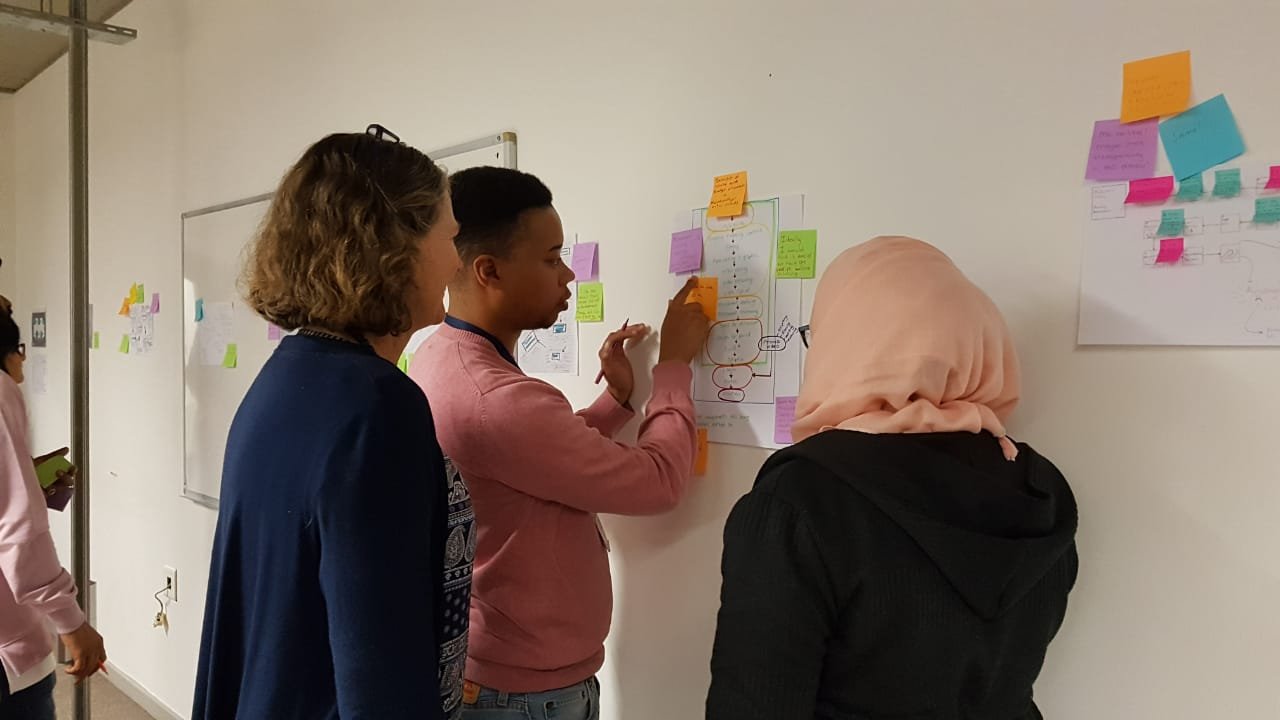
Mara runs product at a 43-person SaaS company in Berlin. Monday, 8:47am: 214 unread Slack messages, a roadmap review at noon she hasn’t prepared, and a customer call at 3pm where she knows — she knows — someone will ask why the feature they begged for still isn’t shipping. She opens her AI chat, not to outsource her job, but to survive the week.
I spent a month working the way Mara works, testing prompts against real product-manager jobs: prioritising a backlog, reading user research without drowning, writing specs people actually read, and saying no to stakeholders without starting a war. The 30 prompts below are organised as her week — Monday to Friday, six per day — because that’s how a PM’s life actually unfolds. Each one survived contact with real work. A few spectacularly didn’t, and I’ll tell you about those too.
Monday: Roadmaps and prioritisation (the noon-review rescue)
The roadmap review is the meeting where every opinion in the company collides. The trick isn’t having answers — it’s having a defensible ranking. These six prompts turn a messy backlog into something you can stand behind at noon.
- The RICE referee. “Here are 12 features with my rough scores for reach, impact, confidence and effort [paste table]. Rank them by RICE score, show your working, and flag any where my confidence score looks suspiciously optimistic compared to the effort.” The confidence-flagging is the point — when we tried this on a real backlog, it called out three features where we’d scored confidence 80% with zero user evidence. Embarrassing. Correct.
- The opportunity-solution tree. “Turn this outcome into an opportunity-solution tree: Outcome — reduce onboarding drop-off from 34% to 20% by Q2. Brainstorm 8-10 opportunities, then 2-3 solution ideas per opportunity. Mark which solutions are bets vs safe improvements.” Output quality jumped when we added the bets-vs-safe framing; without it, the AI plays it safe and gives you ten variations of a tooltip.
- The ruthless cut. “Here’s our Q1 roadmap [paste]. We’re 30% over capacity. Tell me what to cut, and argue for each cut like you’re the engineer who’d have to build it. Don’t be diplomatic.” Asking it to argue against diplomacy is what makes this work — the default response is cowardly. The engineer-role version named two vanity features we’d been protecting for political reasons.
- The now-next-later story. “Convert this feature list into a now-next-later roadmap with a one-sentence ‘why now’ for each item, written for a non-technical CEO. No jargon, no ‘synergy’.” We tested this before a real exec review and the CEO repeated one of the ‘why now’ lines back to us in the meeting. That’s the test: does it sound like something a human would say out loud?
- The competitor mirror. “Compare our roadmap against [competitor]’s last 12 months of launches [paste list]. Where are we ahead, where are we copying, and what’s the one bet they’re not making that we could?”
- The Monday memo. “Summarise this roadmap into a 200-word Monday update for the whole company: what’s shipping this week, what moved, and the one decision I need from leadership. Tone: calm, specific, no hype.” Pairs well with our prompts for project managers if you sit on both sides of the plan.
Tuesday: User research and discovery (reading without drowning)
Twenty-three interview transcripts. Nobody has time to read them all properly, and skimming them is how you miss the insight that matters. These prompts are a reading system, not a shortcut.
- The pattern miner. “Here are 8 user interview transcripts [paste]. Find the 3 strongest recurring pain points. For each, quote the exact user words (don’t paraphrase), count how many interviews mention it, and note any interview where someone contradicted it.” The contradiction request is the anti-hallucination device — it forces the AI to acknowledge the data instead of smoothing it into a story.
- The job-to-be-done extractor. “Rewrite these 5 feature requests as jobs-to-be-done in the format: ‘When [situation], I want [motivation], so I can [outcome]’. Then tell me which of the original requests were actually the same job in disguise.” In our test, 5 requests collapsed into 2 jobs. The roadmap got shorter and better in one pass.
- The silent-majority check. “These support tickets are from our most vocal users [paste 20]. Now, based on typical SaaS behaviour, what are the quiet users probably struggling with that they’d never write in about? Label each guess with a confidence level and how I’d verify it.” This is speculative by design — the point is generating hypotheses to test, not answers to trust.
- The persona stress-test. “Here’s our user persona [paste]. Attack it: what assumptions in here are probably wrong, what behaviour have we never observed, and what would a user who doesn’t fit this persona at all look like?” Personas rot. This keeps them honest.
- The survey autopsy. “We got 340 survey responses; here are the open-text answers [paste sample]. Code them into themes, give me the percentage split, and pull the 5 quotes that best represent each theme. Flag responses that look like bots or speed-clickers.” It flagged 11 responses with identical phrasing patterns we’d have missed. Small win, real money.
- The discovery debrief. “I just finished 6 customer calls. Here are my raw notes [paste]. Write the discovery debrief: what surprised me, what I still don’t know, and the 3 questions I must ask in the next round.” Writing “what I still don’t know” into the template changed our process — we started planning follow-up calls instead of pretending we had answers.
Wednesday: Specs and PRDs (documents people actually read)
Nobody reads a 14-page PRD. They read the first page and the screenshots. These prompts produce specs shaped for how humans actually consume them.
- The one-page PRD. “Turn these scattered notes into a one-page PRD: problem (2 sentences), target user, success metric with a number, scope in/out, and the 3 riskiest assumptions. Max 400 words. If my notes are missing any of these, ask me — don’t invent them.” The ‘ask, don’t invent’ clause is load-bearing. Without it, the AI will cheerfully fabricate your success metric.
- The edge-case hunter. “Here’s my feature spec [paste]. Find 10 edge cases I haven’t covered: empty states, permission levels, offline behaviour, and what happens when two users do this at the same time. Rank by likelihood.” We ran this on a payments feature and it caught the double-refund scenario. That one prompt paid for a year of AI subscriptions.
- The engineer translation. “Rewrite this product requirement for the backend team: strip the marketing language, list the exact API behaviours, state what’s out of scope, and flag anything ambiguous instead of guessing.” Ambiguity-flagging is the feature. A spec that admits what it doesn’t know is worth ten confident ones.
- The acceptance-criteria machine. “Write acceptance criteria for this user story [paste] in Given/When/Then format. Include the unhappy paths. Keep each criterion to one sentence.” Boring prompt, extraordinary ROI — our QA cycle shortened measurably when criteria stopped being vague.
- The launch checklist. “We’re launching [feature] to 20,000 users next Tuesday. Generate the launch checklist: comms, monitoring, rollback plan, support macros, and who owns each item. Assume something will break.” The ‘assume something will break’ line reliably produces a better rollback section than any template we’ve used.
- The changelog writer. “Turn these 14 merged PRs into user-facing release notes: group by value, not by component, write for the user who never reads release notes, and lead with the one thing that’ll make someone’s day.” For the planning side of launches, our AI business plan guide covers the strategy layer above this.
Thursday: Stakeholder communication (saying no without starting a war)
Half of product management is writing. The other half is writing things people will actually agree with. Thursday is diplomacy day.
- The graceful no. “Draft a reply to the sales lead asking for [feature] this quarter. Say no, explain the tradeoff in terms of what we’d have to delay, offer what we CAN do, and keep it under 120 words. Firm but warm.” The tradeoff framing is everything — ‘no’ lands when it comes with the cost made visible.
- The exec summary. “Condense this 6-page product update into 5 bullets for the board: 2 wins with numbers, 2 risks with mitigation, 1 ask. No adjectives.” We tested ‘no adjectives’ on a whim and the result was the clearest board update we’d ever sent. Adjectives are where vagueness hides.
- The difficult conversation prep. “I’m telling the design team we’re cutting their favourite project. Give me the 3 objections they’ll raise, a response to each that respects their work, and the one thing I should NOT say.” The ‘what not to say’ part is the real value — it’s usually the sentence you’d have led with.
- The customer apology. “We shipped a bug that corrupted 200 users’ dashboards. Draft the status-page update: what happened in plain language, what we’re doing, when the next update lands. No ‘we take this seriously’ filler.” Filler phrases are trust-killers. The AI drafts them by default; you have to forbid them explicitly.
- The alignment email. “Three teams disagree on the Q2 priority [paste positions]. Draft the alignment email that names the real disagreement (not the polite version), proposes a decision framework, and sets a 48-hour deadline. Tone: this is the last email about this.”
- The win broadcast. “We hit 92% onboarding completion, up from 66%. Write the company-wide announcement: credit the specific teams, include the number, and explain why it matters for revenue. Under 150 words, no exclamation marks.” The no-exclamation-mark rule sounds fussy until you read AI-generated announcements without it.
Friday: Metrics and retros (ending the week smarter)
- The metric sanity check. “Our dashboard says activation is up 12% but revenue is flat [paste numbers]. List 5 explanations, rank by plausibility, and tell me which single chart would distinguish between the top two.” This prompt has saved us from celebrating vanity metrics twice.
- The retro facilitator. “Here are the team’s retro notes [paste]. Cluster them into themes, identify the one issue mentioned in different words by 3+ people (that’s the real one), and draft 2 concrete experiments for next sprint — each with an owner and a 2-week deadline.”
- The post-mortem. “The launch missed its target by 40%. Write the blameless post-mortem: timeline of what happened, the 3 decisions we’d change, and what we’d do identically. No blame language, no hindsight heroics.”
- The experiment designer. “Design an A/B test for [change]: hypothesis, primary metric, guardrail metrics, minimum sample size, and how long to run at our traffic. Flag if the test is underpowered before we start.” It flagged an underpowered test we’d already scheduled. Awkward meeting. Worth it.
- The week-in-review. “Here are my scattered Friday notes [paste]. Turn them into: 3 things I learned, 2 decisions I made, 1 thing I’m avoiding deciding. Be direct.” The ‘thing I’m avoiding’ line is uncomfortably effective. It named mine correctly on the first try.
- The Monday head-start. “Based on this week’s notes, draft my Monday priorities: the 3 things that actually matter, in order, with the first action for each. Ignore everything that felt urgent but wasn’t important.”
Three prompts that backfired on me
Honesty section. These failed, and the failures taught me more than the wins.
Backfire 1: the ticket summariser invented a feature request. I pasted 47 support tickets and asked for the top 5 requests. It returned a confident #3 — “bulk export to Excel” — that appeared in zero tickets. It had stitched together three unrelated complaints into a phantom consensus. Lesson: never ask for counts without asking for quotes. Now every aggregation prompt includes “quote the exact words.”
Backfire 2: the persona generator flattered me. I asked for a persona from interview data and got a suspiciously perfect user who loved everything about our product. Real users complain. The AI was averaging away the friction — which is exactly the part a PM needs. Lesson: always add “include what they hate about us.”
Backfire 3: the roadmap writer removed the thinking. I asked it to draft the whole Q2 roadmap from notes. The output was polished, plausible, and wrong in ways I only noticed a week later — it had optimised for coherence, not for the hard tradeoffs. Which brings me to my stance.
My stance: the roadmap is the thinking, not the document
Here’s the opinion I’ll defend: a product manager who lets AI write their roadmap is doing the job backwards. The value of a roadmap was never the document — it’s the hundred small decisions you made while building it: the feature you cut after the uncomfortable call, the bet you kept despite the data. An AI-generated roadmap skips the thinking and keeps the formatting. It looks right and means nothing.
Use AI the way Mara does by Friday: as the sparring partner that argues with your priorities, catches your blind spots, and writes the first draft you then tear apart. The prompts above are built for that relationship — every one of them keeps the judgement with you and hands the AI the labour. The moment a prompt starts making decisions for you, delete it.
Thirty prompts. One survived week. And Mara made the noon review with twenty minutes to spare — the RICE table did the talking.
Written by the PromptSkill Team — we test every prompt pack against real work before publishing, including the ones that embarrass us, so you get prompts that survived contact with an actual backlog.
1 thought on “30 AI Prompts for Product Managers: Roadmaps, User Research and Stakeholder Communication (2026)”