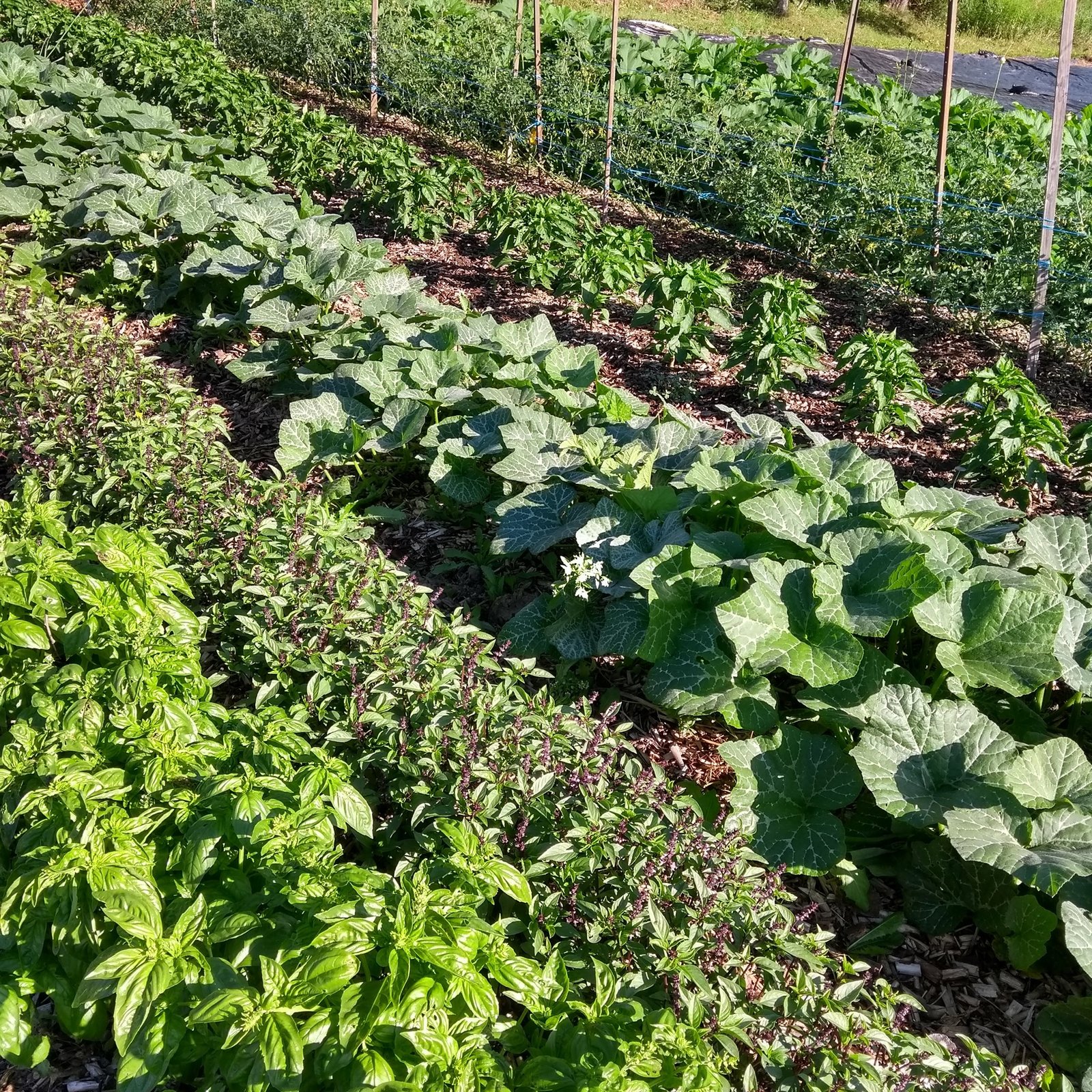
My neighbour in Utrecht has a 40-square-metre garden that produced 23 kilos of tomatoes last summer. I asked her secret. She laughed and pointed at her phone: “I ask the chatbot before I ask anyone. It remembers my soil type. My husband doesn’t.”
She is not a tech person. She grows leeks, keeps bees in a corner hive, and refers to ChatGPT as “the young man in the phone.” And she is right to consult him, because gardening is one of the few hobbies where an AI assistant is genuinely, measurably useful — provided you stop feeding it the vague one-liners that make it answer like a textbook.
Most “AI gardening advice” floating around the internet is worthless: generic paragraphs about watering in the morning and mulching in autumn. The tool is not the problem. The prompt is. A chatbot that knows you garden on a north-facing balcony in Hamburg, in pots, with two hours of direct sun, will give you a completely different — and far better — planting plan than the same chatbot asked “what should I plant in spring?”
This article gives you 30 copy-paste prompts that bake the specifics in. We tested every category of prompt below against ChatGPT, Claude and Gemini with the same garden scenario, and the differences were instructive enough that I’ve included the verdicts.
What we learned testing the same plant problem on three chatbots
The test scenario: a potted tomato plant in Amsterdam, leaves curling upward, no spots, watered daily. We typed the identical description into all three tools.
ChatGPT answered in seconds with a confident diagnosis: heat stress combined with overwatering, and a fix (water less often, more deeply). Claude refused to diagnose immediately — it asked three follow-up questions first (pot size, drainage holes, fertiliser schedule) and only then gave an answer. Gemini landed somewhere in between, with the useful bonus of linking the symptom to a common Dutch mistake: saucers left full of water after rain.
Here is the part worth knowing: Claude’s delayed answer was the most accurate for container plants, and the only one that mentioned root rot risk. The lesson is not that one tool is “best” — it is that the follow-up questions are the feature. If your chatbot is not asking you questions, your prompt is too thin. Add the details yourself: soil, pot size, sun hours, watering routine. Every prompt in this article does that for you.
The opinion nobody in gardening AI seems to state plainly
I will say it: you do not need a paid AI garden planner app. Every subscription garden app we looked at — the ones charging €5 to €12 a month for “AI planting plans” — is a chatbot with a green paint job and a worse interface. A free chatbot with a good prompt produces a better plan, because you can argue with it, correct it, and ask “why” when it suggests something odd. The app just hands you a PDF. Save your money for seeds.
Diagnose and care for your plants (prompts 1–6)
- “My [plant name] has [describe the symptom: yellowing leaves, spots, wilting, curling]. It sits in [sun/shade], I water it [frequency], the soil is [type]. Ask me up to three clarifying questions, then give me the three most likely causes ranked by probability, with one fix for each.”
- “Act as a plant doctor. Here are the facts: [plant], [pot size or bed], [soil type], [sun hours per day], [watering routine], [fertiliser used]. The problem: [symptom]. Give me a diagnosis and a two-week recovery plan with day-by-day instructions.”
- “I want to repot my [plant] from a [current pot size] into a [new pot size]. Tell me the right soil mix (give ratios), the best month to do it in [your country/region], and the five mistakes beginners make when repotting this plant.”
- “Create a watering schedule for my balcony garden. I have [list plants], all in pots of [sizes], facing [direction], in [city]. I am away [X days] every [period]. Include a ‘summer heatwave’ emergency version.”
- “My [plant] has not flowered/fruited in [time period]. It gets [sun hours], I feed it [fertiliser]. Give me five possible reasons, starting with the most common, and tell me which one I can test this week.”
- “I found [describe pest or damage: small green insects, chewed leaves, white powder]. I garden [organically / conventionally] in [country]. Identify the three most likely culprits and give me a treatment for each that is legal and available in the EU.”
Design a garden that actually works (prompts 7–12)
- “Design a planting plan for my [size] garden in [city, country]. It faces [direction] and gets [hours] of direct sun. I want [vegetables / flowers / low maintenance / a mix]. The soil is [clay/sandy/loam]. Give me a layout by zone with plant names, spacing, and which plants should never sit next to each other.”
- “I have a [size] north-facing balcony in [city] with about two hours of direct sun. Recommend ten plants that will genuinely thrive there — no wishful thinking — with pot sizes and whether each is annual or perennial.”
- “Act as a landscape designer who hates wasted space. My garden is [dimensions], [sun exposure], [soil]. I want to grow food for a family of [number]. Give me a companion-planting layout for spring, and tell me which two popular combinations are myths I should ignore.”
- “Suggest a colour-scheme flower bed for [sun/shade] in [hardiness zone or region]. I want blooms from April to October. List plants by height (back/middle/front), flowering month, and water needs.”
- “I want a low-maintenance garden I can neglect for three weeks in August. I live in [region], the garden is [size], [sun exposure]. Give me a plant list, a mulch strategy, and an automatic-watering setup under €100.”
- “Redesign my existing garden on a €[budget] budget. Current state: [describe]. Priorities: [e.g. privacy from neighbours, a seating area, fewer slugs]. Give me a phased plan: what to do this month, this season, and next year.”
Seasonal planning without the spreadsheet dread (prompts 13–18)
- “Create a month-by-month sowing and planting calendar for [city, country] for these crops: [list]. Mark indoor sowing, outdoor sowing, transplanting, and harvest windows. Adjust for the fact that springs here have been arriving [early/late] in recent years.”
- “It is [current month] and I have done nothing in the garden yet. I live in [region]. Give me a realistic catch-up plan: what can still be sown, what should wait until next year, and the three highest-impact jobs for this month.”
- “Plan my autumn garden jobs. I have [fruit trees / vegetable beds / lawn / roses]: [describe]. List jobs by month (September, October, November) with the reason each one matters — I want to understand, not just obey.”
- “When should I prune my [plant/tree type]? I live in [region]. Give me the exact window, the tools I need, a step-by-step for a beginner, and what happens if I prune at the wrong time.”
- “I want to overwinter [list of tender plants] in [country]. I have [a garage / an unheated greenhouse / a bright hallway]. For each plant, tell me: bring inside or mulch heavily, the temperature limit, and how often to water in winter.”
- “Build me a crop rotation plan for [number] raised beds over three years. I grow [list of vegetables]. Show me which family goes where each year and explain which disease each rotation is preventing.”
Pests, diseases and the war of attrition (prompts 19–24)
- “Slugs are destroying my [plants] in [country]. I garden organically and have [pets/children]. Rank these defences by actual effectiveness — copper tape, beer traps, nematodes, wool pellets, night patrols — and tell me which two are a waste of money.”
- “My roses have black spot. I am in [region], the roses are [varieties] planted [spacing]. Give me a treatment plan for this season and a prevention plan for next year, with products I can buy at a European garden centre.”
- “Something is eating my [crop] at night. The damage looks like [describe]. I am in [country]. Help me identify whether it is slugs, cutworms, birds or something else, with one confirming test for each suspect.”
- “Are my [plants] safe after I sprayed [product] [X days] ago? I grow food for my family in [country]. Tell me the official pre-harvest interval, whether washing helps, and what I should use instead next time.”
- “Write me a weekly 15-minute garden inspection routine for [month] in [region]. What should I look at, in what order, and which early warning signs mean I need to act within 48 hours?”
- “I want to attract [bees / ladybirds / hedgehogs] to my [size] garden in [country]. Give me a planting and habitat plan, what to avoid (pesticides, specific plants), and how long before I see results.”
Harvest, kitchen and the side of gardening nobody talks about (prompts 25–30)
- “My [crop] harvest is ready all at once and I cannot eat [X kilos] of courgettes. Give me five preservation methods ranked by effort, with the basic steps for the easiest two, using equipment a normal kitchen has.”
- “I have a glut of [fruit/vegetable]. Suggest [number] recipes that use a lot of it, plus which varieties of [crop] store longest and how to store them without a cellar.”
- “I want to save seeds from my [plant variety] this year. Tell me whether it is open-pollinated or a hybrid (and why that matters), how to avoid cross-pollination with my neighbour’s plants, and the drying and storage steps.”
- “Price out my vegetable garden. I spent €[amount] on seeds, compost and tools this year and harvested roughly [amounts]. Compare that to supermarket prices in [country] and tell me honestly which crops saved money and which were an expensive hobby.”
- “I sell [seedlings / honey / cut flowers] from my garden at a local market in [country]. Write me a simple seasonal plan: what to grow for sale, when to start, and the pricing logic. Include the one legal thing most hobby sellers forget.”
- “Teach me to keep a garden journal with AI. I will send you a weekly note about my [size] garden in [city]. Turn each note into a dated log entry, remind me what I planned last week, and flag patterns — like the aphids arriving the same week two years running.”
Three prompts everyone copies. Don’t.
Short version. Read this like a warning label.
- “Give me gardening tips.” This returns a Wikipedia article with better formatting. It knows nothing about your garden. Never use it.
- “What is wrong with my plant?” with no photo description, no context, no details. The answer will list twelve possibilities. You will learn nothing.
- Any prompt that ends with “make it simple.” Simple is what got you here. Gardening is gloriously specific. Let it be specific.
Making the chatbot your gardening partner, not your gardening oracle
The prompts above share one design principle: they force the conversation to be about your garden. The single highest-leverage habit is the follow-up. After any answer, ask: “What would change about this advice if my soil were clay instead of sandy?” or “What is the most common way beginners mess this up?” The second answer is almost always better than the first — in our testing, across all three chatbots, the follow-up answer contained the practical detail (the exact product name, the precise week, the warning) that the first answer omitted.
One more stance, since I promised opinions: the gardeners who get the most from AI are not the ones with the cleverest prompts. They are the ones who go back outside, look at the actual plant, and come back with better observations. The chatbot is a very patient gardening friend. It is not a substitute for touching the soil. Nobody’s tomatoes ever ripened in a chat window — though at 23 kilos, my neighbour may soon try.
What I’d start with this weekend
If this is your first time pointing an AI tool at your garden, start with prompts 1, 7 and 14. Diagnose one real problem, sketch one real plan, and get one honest catch-up list for the current month. By
Sunday evening you will know whether “the young man in the phone” deserves a place next to your
trowel. My money says he earns it.
1 thought on “30 AI Prompts for Gardeners: Plant Care, Garden Design and Seasonal Planning (2026)”